 |
||
| ||
| |||||
 | |
|---|---|
| Auteur | Sujet : ╚╤╤ [POGNON] Topic Bouse : Mattgiver roule sa Bouse ╤╤╝ |
 Plymouth Double-expert marchés financie | Posté le 27-03-2020 à 23:44:22   Reprise du message précédent :
|
Publicité | Posté le 27-03-2020 à 23:44:22 |
 gundam13 Fan de T-1000 | Posté le 27-03-2020 à 23:44:39
Message cité 1 fois Message édité par gundam13 le 27-03-2020 à 23:45:25 |
divoc | Posté le 27-03-2020 à 23:50:30 |
tomofo2000 | Posté le 27-03-2020 à 23:54:29 |
clem3nt Maitre GIFologue et sarcasmes | Posté le 27-03-2020 à 23:55:19
|
gundam13 Fan de T-1000 | Posté le 27-03-2020 à 23:57:00
|
eloupo | Posté le 28-03-2020 à 00:01:23 Le contenu de ce message a été effacé par son auteur |
SD Plissken Greed is good | Posté le 28-03-2020 à 00:01:32
Message édité par SD Plissken le 28-03-2020 à 00:02:25 |
Esska | Posté le 28-03-2020 à 00:05:23
|
cascayunga | Posté le 28-03-2020 à 00:06:22
|
Publicité | Posté le 28-03-2020 à 00:06:22 |
SD Plissken Greed is good | Posté le 28-03-2020 à 00:06:50
|
frankie_flowers | Posté le 28-03-2020 à 00:09:54 Même si il n'a pas vraiment joué avec son pognon, je pense que Scipion a beaucoup de respect pour les COJONES du bonhomme |
gundam13 Fan de T-1000 | Posté le 28-03-2020 à 00:11:44
|
clem3nt Maitre GIFologue et sarcasmes | Posté le 28-03-2020 à 00:20:14
|
burnout62 | Posté le 28-03-2020 à 00:28:23
--------------- The Only Thing to Fear Is Fear Itself. |
gundam13 Fan de T-1000 | Posté le 28-03-2020 à 00:36:07
|
Demzan Je ne sais pas encore | Posté le 28-03-2020 à 00:37:04 "The biggest U.S. airlines spent 96% of free cash flow last decade on buying back their own shares." Bloomberg.
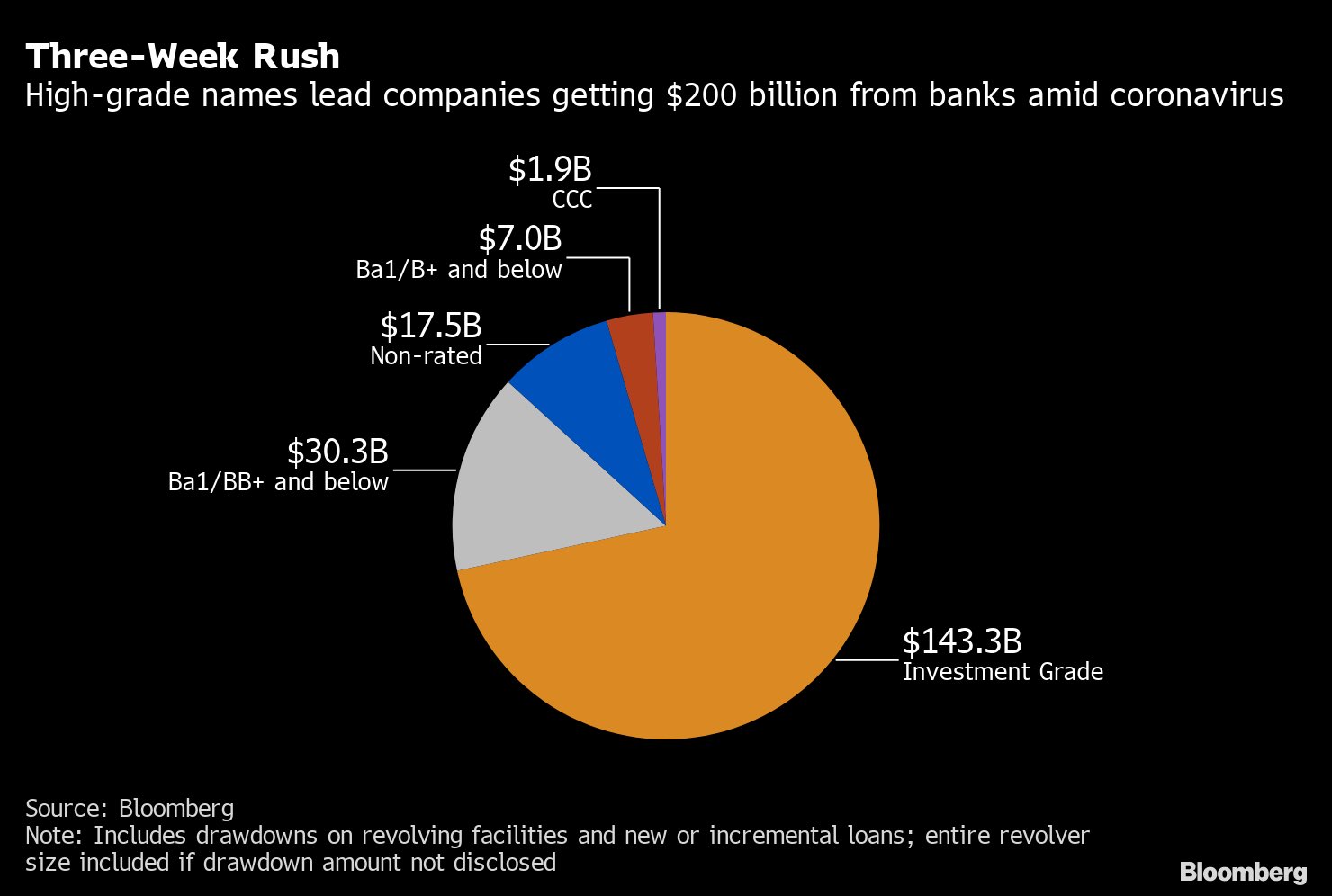
Les entreprises (monde) ont tirée pour 200 Mds$ de crédit en 3 semaines. La majeure partie des IG. Le HY qui a le plus besoin de thune galère à emprunter. Le compte à rebours des faillites des boites fragiles est donc lancé. D'où la panic de l'imprimante de la Fed, 75Mds par jour d'injection de morphine. Sur les 10 dernières années, les sociétés américaines (hors financières) ont emprunté pour 6T$, dont plus que la moitié a servi pour des rachats d'actions. Mais bon, Scipion pense que le marché est correctement pricé, et que la politique monétaire est efficace. Le bilan de la fed est passé à 5T (il était à 800Mds en 2008). Qu'est ce que ça va donner ? Qui sait, personne n'a jamais vecu ça. God save Merica. Petit rappel insolite : une dette, ça se rembourse. à moins qu'on s'appelle l'Argentine ou le tiers consolidé. Message cité 1 fois Message édité par Demzan le 28-03-2020 à 00:39:33 |
ironpanda | Posté le 28-03-2020 à 00:39:17
|
gundam13 Fan de T-1000 | Posté le 28-03-2020 à 00:39:18 Tu reportes tes créances mais il faut toujours payer un moment où un autre |
Pzu | Posté le 28-03-2020 à 00:48:45
|
gundam13 Fan de T-1000 | Posté le 28-03-2020 à 01:39:54 Pas aussi illimité que ça
Message édité par gundam13 le 28-03-2020 à 01:44:22 |
bobor tueur de n44b | Posté le 28-03-2020 à 02:56:15
--------------- Gitan des temps modernes |
bobor tueur de n44b | Posté le 28-03-2020 à 02:58:12
--------------- Gitan des temps modernes |
bobor tueur de n44b | Posté le 28-03-2020 à 03:01:11
--------------- Gitan des temps modernes |
bobor tueur de n44b | Posté le 28-03-2020 à 03:23:56
--------------- Gitan des temps modernes |
bobor tueur de n44b | Posté le 28-03-2020 à 03:30:44
--------------- Gitan des temps modernes |
bobor tueur de n44b | Posté le 28-03-2020 à 03:32:30
--------------- Gitan des temps modernes |
cypress124 | Posté le 28-03-2020 à 06:35:06
Message édité par cypress124 le 28-03-2020 à 06:38:26 |
arylol | Posté le 28-03-2020 à 07:04:02
Amf actionnaire Natixis et ex actionnaire sg repenti |
raukoras | Posté le 28-03-2020 à 08:00:34
Un pays ne doit vendre ses bijoux de famille que s'il a le couteau sous la gorge. D'ailleurs, je me demande ce que ça donnait si on mettait le couteau sous la gorge des US, de la Russie, ou de tout autre pays ayant l'arme nucléaire (allez, au hasard, le Pakistan). Le bouton rouge démangera fortement, je suppose. Et des pays qui n'ont jamais remboursé leur dette, il y en a d'autres (qui a dit "emprunts russes"?) |
gimly the knight | Posté le 28-03-2020 à 08:20:32
Et comment serait il arrivé jusqu'au marché s'ils avaient fait ca |
raph0ux Amateur de PC | Posté le 28-03-2020 à 08:41:00
--------------- [VDS] ↑ Asus Prime Z790-A WiFi ↑ Écran Asus VG32VQ1B ↑ Clavier Corsair K65 ↑ /// LEGO UCS / Poussette Trio Peg Perego |
xenom Plaquettes chaussettes | Posté le 28-03-2020 à 08:41:03
|
Threal | Posté le 28-03-2020 à 08:47:31 J'ai bien aimé le passage sur ceux qui vendent et qui n'arrivent plus à rentrer. Ça me rappelle des gens. |
Profil supprimé | Posté le 28-03-2020 à 08:50:16 |
Threal | Posté le 28-03-2020 à 08:54:45
On a tous une phase bancaire tkt. Ça fait partie du parcours initiatique. Puis on pourra dire IWH en 2020 quand on perdu 95% et que les banques centrales se sont mises à imprimer du PQ parce que ça avait plus de valeur que la monnaie. |
Publicité | Posté le |


![[:ddr555]](https://forum-images.hardware.fr/images/perso/ddr555.gif "[:ddr555]")
![[:darth21:1]](https://forum-images.hardware.fr/images/perso/1/darth21.gif "[:darth21:1]")

![[:arantheus]](https://forum-images.hardware.fr/images/perso/arantheus.gif "[:arantheus]")
![[:copepresident:2]](https://forum-images.hardware.fr/images/perso/2/copepresident.gif "[:copepresident:2]")

 ). Je n'ai pu mettre qu'une louche sur du S&P500.

![[:eeeinstein:2]](https://forum-images.hardware.fr/images/perso/2/eeeinstein.gif "[:eeeinstein:2]")


![[:so-saugrenu]](https://forum-images.hardware.fr/images/perso/so-saugrenu.gif "[:so-saugrenu]")

![[:spamafote]](https://forum-images.hardware.fr/images/perso/spamafote.gif "[:spamafote]")
![[:didierlachance:4]](https://forum-images.hardware.fr/images/perso/4/didierlachance.gif "[:didierlachance:4]")
![[:moonbloood:2]](https://forum-images.hardware.fr/images/perso/2/moonbloood.gif "[:moonbloood:2]")